Balod District Declared 100% Child Marriage Free
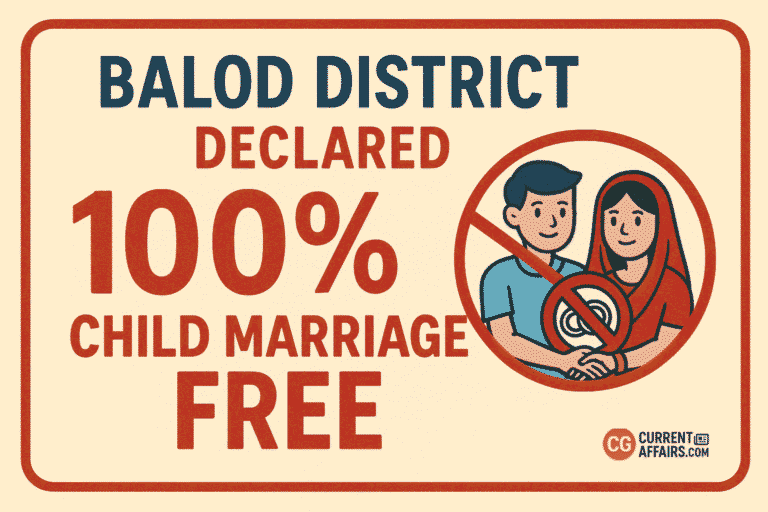
The district of Balod in Chhattisgarh has set a record to announce all the 436 Gram Panchayats and 9 urban local bodies as child marriage free. It is the first district in India where all the Panchayats and municipalities have been officially certified as having no child marriage. The project is in line with the aim of the state government to ensure that Chhattisgarh is child marriage free by 202829. Its success is an indication of community action, government intervention and social movements fighting to eliminate the practice. Authorities stressed that the example could motivate other districts and states to abolish child marriage.
In News
- Balod district already went completely child marriage free and certificates were provided to all 436 Panchayats and 9 urban bodies.
- This success is in line with Chhattisgarh’s vision to end child marriage by 2028-29.
- Recently, Surajpur district in Chhattisgarh has declared 75 village panchayats as “Child Marriage-Free”, setting a benchmark in social reform.
Key Highlights
About the Achievement
- Place: Balod District, Chhattisgarh.
- Certification: 436 Gram Panchayats + 9 Urban Local Bodies are certified to be child marriage free.
- First district in India with 100% certification of local bodies
Background
- Past achievement: Korea district had earlier been declared child marriage free, but not all the local bodies.
- Child marriage free: 75 Gram Panchayats were declared by PM Narendra Modi 75th Amrit Mahotsav.
Additional Info
- The program includes creating awareness, law enforcement and community mobilization.
- Certification is a way of official acknowledgment and encouragement to other districts.
- The program can be used to implement child marriage eradication in the state and national level based on the success.
Definition of Child Marriage
- Definition: A child marriage is a situation in which a person gets married or engaged in an informal marriage before the legal age.
Law related to Child marriage in India
- Legal Age: The minimum legal age in India is 18 years of age in girls and 21 years of age in boys.
- Legislature: Regulated by the Prohibition of Child Marriage Act, 2006 (law in place of the 1929 Act).
- Status: Child marriage can be voided at the discretion of either party but voided in case consent was made through fraud/trafficking.
- Punishment: 2 years of strict jail and/or 1 lakh penalty.
- Maintenance: Husband (in case major) or parents of husband (in case minor) are bound to pay maintenance to girl child.
Impacts of Child Marriage
Health Risks
- Increased exposure to STIs such as HIV.
- Pregnancy at a young age (15-19 years of age) = most mortality of the mother is at the age of 15 years.
- Risk of cancer, diabetes, heart attack, stroke, psychiatric diseases is increased.
Education & Deprivation of Rights
- Girls lose Right to Education, Right to Leisure and Right to avoid being abused.
- No choice, but to leave school, which results in reliance and gender inequality.
Economic & Demographic Impact
- Results in bigger families and postpones demographic split.
- Gigantic waste of future labor force (teachers, doctors, entrepreneurs).
- World Bank report: Child marriage will cost trillions to third world countries by 2030.
Family Institution
- Immaturity and irresponsibility of young couples disrupts family set up.
Socio-Economic Reasons and Factors
- Age/Education Inequalities: 15-18 girls are unproductive; school drop-out exposes them to vulnerability.
- Perceived Liability: Girls perceived to be a financial burden.
- Dowry: Dowry practices are still in existence even after prohibition.
- Insecurity: Daughter is married off because of insecurity.
- Legal Loopholes: The laws are in existence but not all countries nullify the marriage after it has been held.
Global Prevalence
- Sub-Saharan Africa: 4 out of 10 girls married off before 18 (highest).
- South Asia: every 10th girl; 50% to 30% improvement.
- Latin America & Caribbean: 25%.
- 25 million child marriages prevented over the past ten years.
India’s Contribution
- India = 33 proportion of child brides in the world (= 103 million).
- UNICEF: 27 percent of girls wed off below 18 years (compared to 47 percent ten years ago).
- The prevalence among the girls aged 1519 reduced to 11.9% (20052016).
- High Prevalence Districts: Murshidabad (WB), Gandhinagar (GJ), Bhilwara (RJ).
- Most ST girls (15%), then SC girls (13%).
Moving Forward
- SDG 5: End gender inequality and empowerment (child marriage).
- Acceleration Requirement: 150 million more girls are going to be married before 18 years at the present rate by 2030.
- Key Strategies:
- Stricter law enforcement.
- Sensitization concerning social and economic effects.
- Compulsory schooling until 18 years of age.
Conclusion
The entire Balod district becoming child marriage free is a model breakthrough in social reform. It emphasizes the power of concerted government action and civil engagements. The program offers a viable example to other districts that would want to eradicate child marriage. This success enhances the dedication of Chhattisgarh to child rights, social justice and inclusive development.
CGPSC Practice Questions
CGPSC Prelims Practice Questions
- Balod district’s initiative aligns with which government target?
(a) Make Chhattisgarh child marriage free by 2030
(b) Make Chhattisgarh child marriage free by 2028–29
(c) Make India child marriage free by 2025
(d) Reduce child labor by 50%
CGPSC Mains Practice Questions
- Discuss the role of community participation and government initiatives in eliminating social evils like child marriage.
Read in Hindi
बालोद जिला 100% बाल विवाह मुक्त घोषित
छत्तीसगढ़ के बालोद ज़िले ने सभी 436 ग्राम पंचायतों और 9 शहरी स्थानीय निकायों को बाल विवाह मुक्त घोषित करके एक कीर्तिमान स्थापित किया है। यह भारत का पहला ज़िला है जहाँ सभी पंचायतों और नगर पालिकाओं को आधिकारिक तौर पर बाल विवाह मुक्त घोषित किया गया है। यह परियोजना राज्य सरकार के उस लक्ष्य के अनुरूप है जिसके तहत छत्तीसगढ़ को 2028-29 तक बाल विवाह मुक्त बनाना है। इसकी सफलता सामुदायिक कार्रवाई, सरकारी हस्तक्षेप और इस प्रथा को समाप्त करने के लिए लड़ रहे सामाजिक आंदोलनों का प्रतीक है। अधिकारियों ने ज़ोर देकर कहा कि यह उदाहरण अन्य ज़िलों और राज्यों को बाल विवाह उन्मूलन के लिए प्रेरित कर सकता है।
समाचार में
- बालोद जिला पहले ही पूरी तरह बाल विवाह मुक्त हो चुका है और सभी 436 पंचायतों और 9 नगरीय निकायों को प्रमाण पत्र प्रदान किए जा चुके हैं।
- यह सफलता छत्तीसगढ़ के 2028-29 तक बाल विवाह समाप्त करने के दृष्टिकोण के अनुरूप है।
- यह सामूहिक कार्रवाई की ताकत को दर्शाता है, जो सरकारी निकायों, सामुदायिक नेताओं और सामाजिक कार्यकर्ताओं का काम है।
प्रमुख बिंदु
उपलब्धि के बारे में
- स्थान: बालोद जिला, छत्तीसगढ़।
- प्रमाणीकरण: 436 ग्राम पंचायतों + 9 शहरी स्थानीय निकायों को बाल विवाह मुक्त प्रमाणित किया गया है।
- भारत में स्थानीय निकायों का 100 प्रतिशत प्रमाणीकरण करने वाला पहला राज्य।
पृष्ठभूमि
- पिछली उपलब्धि: कोरिया जिले को पहले ही बाल विवाह मुक्त घोषित कर दिया गया था, लेकिन सभी स्थानीय निकायों को नहीं।
- बाल विवाह मुक्त: पीएम नरेंद्र मोदी ने 75वें अमृत महोत्सव के अवसर पर 75 ग्राम पंचायतों को बाल विवाह मुक्त घोषित किया।
अतिरिक्त जानकारी
- इस कार्यक्रम में जागरूकता पैदा करना, कानून प्रवर्तन और सामुदायिक लामबंदी शामिल है।
- प्रमाणन अन्य जिलों के लिए आधिकारिक स्वीकृति और प्रोत्साहन का एक तरीका है।
- इस कार्यक्रम की सफलता के आधार पर इसका उपयोग राज्य और राष्ट्रीय स्तर पर बाल विवाह उन्मूलन को लागू करने के लिए किया जा सकता है।
परिभाषा और भारतीय कानून।
- परिभाषा: बाल विवाह एक ऐसी स्थिति है जिसमें कोई व्यक्ति कानूनी उम्र से पहले शादी कर लेता है या अनौपचारिक विवाह कर लेता है।
- कानूनी आयु: भारत में लड़कियों के लिए न्यूनतम कानूनी आयु 18 वर्ष तथा लड़कों के लिए 21 वर्ष है।
- विधानमंडल: बाल विवाह निषेध अधिनियम, 2006 (1929 अधिनियम के स्थान पर कानून) द्वारा विनियमित।
- बालक: 21 वर्ष से कम आयु का पुरुष और 18 वर्ष से कम आयु की महिला।
- स्थिति: बाल विवाह को किसी भी पक्ष के विवेक पर रद्द किया जा सकता है, लेकिन धोखाधड़ी/तस्करी के माध्यम से सहमति दिए जाने की स्थिति में इसे रद्द किया जा सकता है।
- सजा: 2 वर्ष की कठोर जेल और/या 1 लाख रुपये का जुर्माना।
- भरण-पोषण: पति (यदि वह वयस्क है) या पति के माता-पिता (यदि वह नाबालिग है) बालिका को भरण-पोषण देने के लिए बाध्य हैं।
बाल विवाह के प्रभाव
स्वास्थ्य जोखिम
- एचआईवी जैसे यौन संचारित रोगों के संपर्क में वृद्धि।
- कम उम्र में गर्भधारण (15-19 वर्ष की आयु) = माँ की मृत्यु दर सबसे अधिक 15 वर्ष की आयु में होती है।
- कैंसर, मधुमेह, दिल का दौरा, स्ट्रोक, मानसिक रोगों का खतरा बढ़ जाता है।
शिक्षा एवं अधिकारों से वंचित करना।
- लड़कियां शिक्षा का अधिकार, अवकाश का अधिकार और दुर्व्यवहार से बचने का अधिकार खो देती हैं।
- स्कूल छोड़ने के अलावा कोई विकल्प नहीं है, जिसके परिणामस्वरूप निर्भरता और लैंगिक असमानता पैदा होती है।
आर्थिक एवं जनसांख्यिकीय प्रभाव।
- इससे परिवार बड़े होते हैं और जनसांख्यिकीय विभाजन स्थगित हो जाता है।
- भावी श्रम शक्ति (शिक्षक, डॉक्टर, उद्यमी) की भारी बर्बादी।
- विश्व बैंक की रिपोर्ट: 2030 तक बाल विवाह से तीसरी दुनिया के देशों को खरबों डॉलर का नुकसान होगा।
पारिवारिक संस्था
- युवा दम्पतियों की अपरिपक्वता और गैरजिम्मेदारी पारिवारिक व्यवस्था को बिगाड़ देती है।
सामाजिक-आर्थिक कारण और कारक.
- आयु/शिक्षा असमानताएं: 15-18 वर्ष की लड़कियां अनुत्पादक होती हैं; स्कूल छोड़ने से वे असुरक्षित हो जाती हैं।
- कथित दायित्व: लड़कियों को वित्तीय बोझ समझा जाता है।
- दहेज: निषेध के बाद भी दहेज प्रथा अभी भी अस्तित्व में है।
- असुरक्षा: असुरक्षा के कारण बेटी की शादी कर दी जाती है।
- कानूनी खामियां: कानून तो मौजूद हैं, लेकिन सभी देश विवाह संपन्न होने के बाद उसे रद्द नहीं करते।
वैश्विक प्रसार
- उप-सहारा अफ्रीका: 10 में से 4 लड़कियों की शादी 18 वर्ष से पहले कर दी जाती है (सबसे अधिक)।
- दक्षिण एशिया: हर 10वीं लड़की; 50 प्रतिशत से 30 प्रतिशत सुधार।
- लैटिन अमेरिका और कैरिबियन: 25%.
- मेना क्षेत्र: 17%.
- पिछले दस वर्षों में 25 मिलियन बाल विवाह रोके गए।
भारत का योगदान
- भारत = विश्व में बाल वधुओं का 33वां अनुपात (= 103 मिलियन)।
- यूनिसेफ: 27 प्रतिशत लड़कियों की शादी 18 वर्ष से कम उम्र में हो जाती है (दस वर्ष पहले यह आंकड़ा 47 प्रतिशत था)।
- 15-19 वर्ष की आयु की लड़कियों में यह प्रचलन घटकर 11.9% (2005-2016) रह गया।
- उच्च प्रसार वाले जिले: मुर्शिदाबाद (पश्चिम बंगाल), गांधीनगर (गुजरात), भीलवाड़ा (राजस्थान)।
- सबसे अधिक अनुसूचित जनजाति लड़कियाँ (15%), उसके बाद अनुसूचित जाति लड़कियाँ (13%)।
आगे बढ़ते हुए
- एसडीजी 5: लैंगिक असमानता और सशक्तिकरण (बाल विवाह) को समाप्त करना।
- त्वरण आवश्यकता: वर्तमान दर के अनुसार 2030 तक 150 मिलियन से अधिक लड़कियों का विवाह 18 वर्ष से पहले हो जाएगा।
- प्रमुख रणनीतियाँ:
- कठोर कानून प्रवर्तन.
- सामाजिक और आर्थिक प्रभावों के संबंध में संवेदनशीलता।
- 18 वर्ष की आयु तक अनिवार्य स्कूली शिक्षा।
निष्कर्ष
बालोद जिले का बाल विवाह मुक्त होना सामाजिक सुधार में एक आदर्श सफलता है। यह समन्वित सरकारी कार्रवाई और नागरिक सहभागिता की शक्ति पर ज़ोर देता है। यह कार्यक्रम उन अन्य जिलों के लिए एक व्यावहारिक उदाहरण प्रस्तुत करता है जो बाल विवाह उन्मूलन चाहते हैं। यह सफलता बाल अधिकारों, सामाजिक न्याय और समावेशी विकास के प्रति छत्तीसगढ़ के समर्पण को दर्शाती है।
सीजीपीएससी प्रश्न
सीजीपीएससी प्रारंभिक परीक्षा अभ्यास प्रश्न
- बालोद ज़िले की पहल किस सरकारी लक्ष्य के अनुरूप है?
(a) 2030 तक छत्तीसगढ़ को बाल विवाह मुक्त बनाना
(b) 2028-29 तक छत्तीसगढ़ को बाल विवाह मुक्त बनाना
(c) 2025 तक भारत को बाल विवाह मुक्त बनाना
(d) बाल श्रम में 50% की कमी लाना
सीजीपीएससी मुख्य परीक्षा अभ्यास प्रश्न
- बाल विवाह जैसी सामाजिक बुराइयों को समाप्त करने में सामुदायिक भागीदारी और सरकारी पहल की भूमिका पर चर्चा करें।
FAQs: Balod District Declared 100% Child Marriage Free
Which district has been declared 100% child marriage free in India?
What is significant about Balod’s achievement?
How does this align with state goals?
What was the previous milestone before Balod?
Under which law is child marriage prohibited in India?
What are the punishments under this Act?
What are the major impacts of child marriage?
What are key causes of child marriage in India?
What is India’s global position on child marriage?
Why is Balod’s achievement important nationally?
Related Articles
Category
- Chhattisgarh
- National
- International
- Environment
- Geography
- Art & Culture
- Economics
- Polity
- History
- CGPSC Previous Year Papers
- Union Budget Summary
- CG Budget Summary
- Economic Survey Summary
- Current Affairs Monthly Magazine
- Monthly MCQ Consolidation
- Daily Answer Writing Practice
- Practice Quiz
- Download PDF