Mega Survey of OBCs in Chhattisgarh: Digital Census 2025
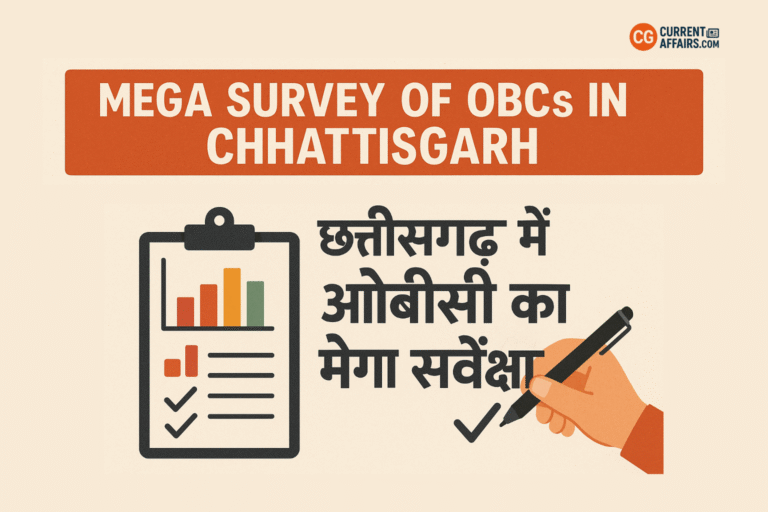
Chhattisgarh government has initiated a mega digital survey to determine the actual socio-economic condition of the Other Backward Classes (OBCs) in the state. The digital database containing Chhattisgarh OBC Welfare Commission will comprise approximately 1.25 crore OBC people. The survey will include a set of parameters related to an economy, education, social and employment in order to have a deeper insight into the policies. A specially designed software system is being used in data collection at the district and community level. This will be done to guarantee proper representation and inform the future welfare schemes and reservations through evidence.
In News
- The Chhattisgarh OBC Welfare Commission has initiated a massive statewide survey of OBC communities.
- The survey aims at developing a digital database of more than 1.25 crore OBCs, the first of its kind in the state.
- It will assist the government to know realities on the ground and devise specific welfare policies.
Key Highlights
Need of OBC survey in CG
- To gather genuine and measurable statistics on social and economic status of OBC communities.
- The survey will be used to determine the lapses in education, employment, and government representation.
Implementation of OBC survey in CG
- The OBC Welfare Commission has devised a special software which is used to enter and analyze data.
- The district data will be posted online to make it transparent and efficient.
- The survey has approximately 95-96 OBC castes, such as Rangrez, Dhobi, Nai, Teli, Lohar, Sunar, Badhai, Bhoi, Kevat, and Ahir.
Community Engagement
- Seminars and workshops are being arranged with the representatives of the community so as to collect the field level of information accurately.
- There is training of local organizations and volunteers to help in the survey process.
Challenges of OBC Survey in CG
- Disagreements among some groups could be a barrier to collective participation due to political and organizational divisions.
- The Commission is concerned about the accuracy of data and their neutrality.
Government Approach
- There had been an OBC count under the previous Congress government by the Quantifiable Data Commission.
- The ongoing BJP regime has intensified the initiative by a more detailed and technological survey under the OBC Welfare Commission.
Background of OBC survey
- Thousands of years ago, caste was one of the key characteristics of Indian society that defines occupation, education, marriage, and social mobility.
- It also defines resource accessibility, opportunities and political representation.
- Nevertheless, no recent detailed information on socio-economic status of different castes is available.
- The final complete census by caste was done in 1931 during the British period.
- The only Scheduled Castes (SCs) and Scheduled Tribes (STs) that were listed separately in the Census of India since Independence were Scheduled Castes and Scheduled Tribes.
About Other Backward Classes (OBCs)
- The OBCs, who are entitled to 27% in education and government employment, are not factored out in the national census.
- They are an eclectic and geographically diverse group of India.
- According to the estimates by the Mandal Commission (1980), OBCs were 52% of the Indian population (using secondary sources).
- Since that time, no recent data has been gathered that would check or improve on such an estimate.
- Different political parties, social organizations, and civil societies have been insisting on a caste-based census that will enable proper and evidence-based policymaking.
Objectives Pursued by a Caste Census
- Fairness in Distribution of Reservation Privileges
- Determines the specific percentage of OBCs and sub-categories, which is to be fairly represented in the reservation policies.
- Conceptualizing Social Inequality
- Illuminates on the level of deprivation, discrimination, and marginalization that SCs, STs, and OBCs experience.
- Informed Policy Design
- Empowers selective and evidence-based welfare programs to the backward and underrepresented.
- Promoting Social Justice
- Helps subvert caste hierarchies and the upper caste dominance in the socio-economic domains.
- Empowerment of Marginalized groups
- Recognizes themselves, sense of pride and role in nation-building.
Significance of Caste Census
- Gives correct demographic information on which to plan policy and allocate resources fairly.
- Impacts on political representation – can result in a change of reserved seats in favour of SCs and STs.
- Determines political activism and coalition according to caste facts.
- Enhances affirmative action by creating benefits attainable in the worst-off section of OBCs and other groups.
- Helps to realize inclusive growth and governance equality.
Challenges and Concerns
- Definitional Ambiguity
- The inability to categorize the members of this or that caste/sub-caste, different by states and regions.
- Data Fidelity and Data Manipulation
- There is the risk of false reporting or hiding caste identity in favor of any individual or political benefit.
- Privacy and Confidentiality
- Distribution between transparency and individual right of privacy as well as prevention of tensions in society.
- Political and Social Backlash
- Potential opposition of higher caste formations doubting the intent and result of such enumeration.
- Ethical Concerns
- Danger of strengthening caste differences or stereotypes through re- validation of birth- based identities.
- Administrative Challenges
- It takes a lot of logistical planning, trained personnel and political agreement to make it reliable.
Conclusion
The OBC Mega Survey is an important initiative towards social justice that is more data-driven in Chhattisgarh. It will enhance evidence based policymaking of backward class welfare. The survey will be able to provide a fair representation and inclusion of the marginalized community by mapping socio-economic realities. This project will be a demonstration to other states on good and transparent governance that is technology-driven.
CGPSC Practice Questions
CGPSC Prelims Practice Questions
- Which organization is conducting the OBC Mega Survey in Chhattisgarh?
(a) NITI Aayog (b) Chhattisgarh OBC Welfare Commission (c) Census Directorate (d) State Data Centre - Approximately how many OBC citizens are being covered under the ongoing survey?
(a) 25 lakh (b) 50 lakh (c) 1.25 crore (d) 2 crore - The OBC Mega Survey in Chhattisgarh primarily aims to study —
(a) Agricultural productivity (b) Socio-economic conditions (c) Migration trends (d) Forest resources
CGPSC Mains Practice Questions
- Discuss the significance of the OBC Mega Survey initiated in Chhattisgarh in promoting data-based governance and inclusive policy formulation.
- How can a digital socio-economic database help in addressing inequalities and improving welfare delivery for backward communities?
- Evaluate the role of technology in ensuring transparency and participation in large-scale social surveys like the OBC Mega Survey.
Read in Hindi
छत्तीसगढ़ में ओबीसी का मेगा सर्वेक्षण: डिजिटल जनगणना 2025
छत्तीसगढ़ सरकार ने राज्य में अन्य पिछड़ा वर्ग (ओबीसी) की वास्तविक सामाजिक-आर्थिक स्थिति का पता लगाने के लिए एक विशाल डिजिटल सर्वेक्षण शुरू किया है। छत्तीसगढ़ ओबीसी कल्याण आयोग के डिजिटल डेटाबेस में लगभग 1.25 करोड़ ओबीसी लोग शामिल होंगे। इस सर्वेक्षण में अर्थव्यवस्था, शिक्षा, सामाजिक और रोज़गार से जुड़े कई मानदंड शामिल होंगे ताकि नीतियों की गहन जानकारी मिल सके। ज़िला और सामुदायिक स्तर पर डेटा संग्रह के लिए एक विशेष रूप से डिज़ाइन की गई सॉफ़्टवेयर प्रणाली का उपयोग किया जा रहा है। यह सर्वेक्षण उचित प्रतिनिधित्व सुनिश्चित करने और साक्ष्यों के माध्यम से भविष्य की कल्याणकारी योजनाओं और आरक्षणों की जानकारी देने के लिए किया जाएगा।
समाचार में
- छत्तीसगढ़ ओबीसी कल्याण आयोग ने ओबीसी समुदायों का एक व्यापक राज्यव्यापी सर्वेक्षण शुरू किया है।
- इस सर्वेक्षण का उद्देश्य 1.25 करोड़ से अधिक ओबीसी का एक डिजिटल डेटाबेस तैयार करना है, जो राज्य में अपनी तरह का पहला सर्वेक्षण होगा।
- इससे सरकार को जमीनी हकीकत जानने और विशिष्ट कल्याणकारी नीतियाँ बनाने में मदद मिलेगी।
प्रमुख बिंदु
सर्वेक्षण का उद्देश्य
- ओबीसी समुदायों की सामाजिक और आर्थिक स्थिति पर वास्तविक और मापनीय आँकड़े एकत्र करना।
- इस सर्वेक्षण का उपयोग शिक्षा, रोज़गार और सरकारी प्रतिनिधित्व में कमियों का पता लगाने के लिए किया जाएगा।
कार्यान्वयन - ओबीसी कल्याण आयोग ने एक विशेष सॉफ़्टवेयर तैयार किया है जिसका उपयोग डेटा दर्ज करने और उसका विश्लेषण करने के लिए किया जाता है।
- ज़िले के आँकड़ों को पारदर्शी और कुशल बनाने के लिए उन्हें ऑनलाइन पोस्ट किया जाएगा।
- सर्वेक्षण में लगभग 95-96 ओबीसी जातियाँ शामिल हैं, जैसे रंगरेज़, धोबी, नाई, तेली, लोहार, सुनार, बधाई, भोई, केवट और अहीर।
सामुदायिक सहभागिता
- क्षेत्र स्तर की जानकारी सटीक रूप से एकत्र करने के लिए समुदाय के प्रतिनिधियों के साथ
- सेमिनार और कार्यशालाएँ आयोजित की जा रही हैं।
सर्वेक्षण प्रक्रिया में - सहायता के लिए स्थानीय संगठनों और स्वयंसेवकों को प्रशिक्षित किया जा रहा है।
चुनौतियाँ
राजनीतिक और संगठनात्मक
- विभाजनों के कारण कुछ समूहों के बीच मतभेद सामूहिक भागीदारी में बाधा बन सकते हैं।
- आयोग आँकड़ों की सटीकता और उनकी तटस्थता को लेकर चिंतित है।
सरकारी दृष्टिकोण
- पिछली कांग्रेस सरकार के कार्यकाल में क्वांटिफिएबल डेटा कमीशन द्वारा ओबीसी गणना की गई थी।
- वर्तमान भाजपा सरकार ने ओबीसी कल्याण आयोग के तहत अधिक विस्तृत और तकनीकी सर्वेक्षण के माध्यम से इस पहल को और तेज़ कर दिया है।
पृष्ठभूमि
- हज़ारों साल पहले, जाति भारतीय समाज की प्रमुख विशेषताओं में से एक थी जो व्यवसाय, शिक्षा, विवाह और सामाजिक गतिशीलता को परिभाषित करती है।
- यह संसाधनों की पहुँच, अवसरों और राजनीतिक प्रतिनिधित्व को भी परिभाषित करती है।
फिर भी, विभिन्न जातियों की सामाजिक-आर्थिक स्थिति के बारे में कोई विस्तृत जानकारी उपलब्ध नहीं है। - जाति के आधार पर अंतिम पूर्ण जनगणना ब्रिटिश काल के दौरान 1931 में की गई थी।
- स्वतंत्रता के बाद से भारत की जनगणना में केवल अनुसूचित जाति (SC) और अनुसूचित जनजाति (ST) को अलग से सूचीबद्ध किया गया था।
अन्य पिछड़ा वर्ग (OBC)
- OBC, जो शिक्षा और सरकारी नौकरियों में 27% के हकदार हैं, राष्ट्रीय जनगणना में शामिल नहीं हैं।
- वे भारत का एक विविध और भौगोलिक रूप से विविध समूह हैं।
- मंडल आयोग (1980) के अनुमानों के अनुसार, OBC भारतीय जनसंख्या का 52 प्रतिशत थे (द्वितीयक स्रोतों का उपयोग करके)।
- उसके बाद से, ऐसा कोई हालिया डेटा एकत्र नहीं किया गया है जो इस अनुमान की पुष्टि या सुधार कर सके।
- विभिन्न राजनीतिक दल, सामाजिक संगठन और नागरिक समाज जाति-आधारित जनगणना पर ज़ोर दे रहे हैं जिससे उचित और साक्ष्य-आधारित नीति-निर्माण संभव हो सकेगा।
जाति जनगणना द्वारा प्राप्त उद्देश्य।
- आरक्षण विशेषाधिकारों के वितरण में निष्पक्षता
- ओबीसी और उप-श्रेणियों का विशिष्ट प्रतिशत निर्धारित करता है,
- जिनका आरक्षण नीतियों में उचित प्रतिनिधित्व होना है।
- सामाजिक असमानता की अवधारणा
- एससी, एसटी और ओबीसी द्वारा अनुभव किए जाने वाले वंचना, भेदभाव और हाशिए पर होने के स्तर पर प्रकाश डालता है।
- सूचित नीति निर्माण
- पिछड़े और कम प्रतिनिधित्व वाले लोगों के लिए चुनिंदा और साक्ष्य-आधारित कल्याणकारी कार्यक्रमों को सशक्त बनाता है।
- सामाजिक न्याय को बढ़ावा देना
- सामाजिक-आर्थिक क्षेत्रों में जातिगत पदानुक्रम और उच्च जाति के प्रभुत्व को कम करने में मदद करता है।
- हाशिए पर पड़े समूहों का सशक्तिकरण।
- स्वयं को पहचानना, गौरव की भावना और राष्ट्र निर्माण में अपनी भूमिका को पहचानना।
जाति जनगणना का महत्व
- सही जनसांख्यिकीय जानकारी प्रदान करता है जिसके आधार पर नीति नियोजन और संसाधनों का उचित आवंटन किया जा सकता है।
- राजनीतिक प्रतिनिधित्व पर प्रभाव – अनुसूचित जातियों और अनुसूचित जनजातियों के पक्ष में आरक्षित सीटों में बदलाव हो सकता है।
- जातिगत तथ्यों के आधार पर राजनीतिक सक्रियता और गठबंधन का निर्धारण करता है।
- अन्य पिछड़ा वर्ग और अन्य समूहों के सबसे पिछड़े वर्ग को लाभ पहुँचाकर सकारात्मक कार्रवाई को बढ़ावा देता है।
- समावेशी विकास और शासन में समानता लाने में मदद करता है।
चुनौतियाँ और चिंताएँ
- परिभाषा संबंधी अस्पष्टता
- राज्यों और क्षेत्रों के अनुसार भिन्न-भिन्न जाति/उप-जाति के सदस्यों को वर्गीकृत करने में असमर्थता।
- आँकड़ों की विश्वसनीयता और आँकड़ों में हेराफेरी।
- किसी व्यक्ति या राजनीतिक लाभ के लिए झूठी रिपोर्टिंग या जातिगत पहचान छिपाने का जोखिम है।
- गोपनीयता
- पारदर्शिता और व्यक्तिगत निजता के अधिकार के बीच संतुलन और साथ ही समाज में तनाव की रोकथाम।
- राजनीतिक और सामाजिक प्रतिक्रिया।
- उच्च जाति समूहों द्वारा इस तरह की गणना के उद्देश्य और परिणाम पर संदेह करने का संभावित विरोध।
- नैतिक चिंताएँ
- जन्म-आधारित पहचानों के पुनर्मान्यीकरण के माध्यम से जातिगत मतभेदों या रूढ़ियों को मजबूत करने का खतरा।
- प्रशासनिक चुनौतियाँ
- इसे विश्वसनीय बनाने के लिए बहुत सारी तार्किक योजना, प्रशिक्षित कर्मियों और राजनीतिक सहमति की आवश्यकता होती है।
निष्कर्ष
ओबीसी मेगा सर्वेक्षण छत्तीसगढ़ में सामाजिक न्याय की दिशा में एक महत्वपूर्ण पहल है जो अधिक आँकड़ों पर आधारित है। यह पिछड़े वर्ग कल्याण के साक्ष्य-आधारित नीति-निर्माण को बढ़ावा देगा। यह सर्वेक्षण सामाजिक-आर्थिक वास्तविकताओं का मानचित्रण करके हाशिए पर पड़े समुदाय का निष्पक्ष प्रतिनिधित्व और समावेशन सुनिश्चित करने में सक्षम होगा। यह परियोजना अन्य राज्यों के लिए प्रौद्योगिकी-संचालित सुशासन और पारदर्शी शासन का एक उदाहरण होगी।
सीजीपीएससी प्रश्न
सीजीपीएससी प्रारंभिक परीक्षा अभ्यास प्रश्न
- छत्तीसगढ़ में ओबीसी मेगा सर्वेक्षण कौन सा संगठन कर रहा है?
(a) नीति आयोग (b) छत्तीसगढ़ ओबीसी कल्याण आयोग (c) जनगणना निदेशालय (d) राज्य डेटा केंद्र - वर्तमान सर्वेक्षण में लगभग कितने ओबीसी नागरिकों को शामिल किया जा रहा है?
(a) 25 लाख (b) 50 लाख (c) 1.25 करोड़ (d) 2 करोड़ - छत्तीसगढ़ में ओबीसी मेगा सर्वेक्षण का मुख्य उद्देश्य निम्नलिखित का अध्ययन करना है –
(a) कृषि उत्पादकता (b) सामाजिक-आर्थिक स्थितियाँ (c) प्रवासन प्रवृत्तियाँ (d) वन संसाधन
सीजीपीएससी मुख्य परीक्षा अभ्यास प्रश्न
- छत्तीसगढ़ में शुरू किए गए ओबीसी मेगा सर्वेक्षण के डेटा-आधारित शासन और समावेशी नीति निर्माण को बढ़ावा देने में महत्व पर चर्चा कीजिए।
- एक डिजिटल सामाजिक-आर्थिक डेटाबेस असमानताओं को दूर करने और पिछड़े समुदायों के लिए कल्याणकारी योजनाओं को बेहतर बनाने में कैसे मदद कर सकता है?
- ओबीसी मेगा सर्वेक्षण जैसे बड़े पैमाने के सामाजिक सर्वेक्षणों में पारदर्शिता और भागीदारी सुनिश्चित करने में प्रौद्योगिकी की भूमिका का मूल्यांकन कीजिए।
Also Read: Launch of “didi ke goth” programme in CG
Related Articles
Category
- Chhattisgarh
- National
- International
- Environment
- Geography
- Art & Culture
- Economics
- Polity
- History
- CGPSC Previous Year Papers
- Union Budget Summary
- CG Budget Summary
- Economic Survey Summary
- Current Affairs Monthly Magazine
- Monthly MCQ Consolidation
- Daily Answer Writing Practice
- Practice Quiz
- Download PDF